

How Close Are Driverless Cars? Navigating the Future of Autonomous Motoring
The concept of driverless cars has transitioned from the pages of science fiction into a multi-billion-pound reality. Major tech companies and traditional automotive giants are investing heavily in autonomous vehicle (AV) technology, aiming to permanently reshape how we travel. But while self-driving prototypes have become a common sight in testing hubs across the globe, everyday motorists are left wondering: how close are we actually to seeing driverless cars dominate UK roads?
As the driving experience changes, the way we perceive and personalise our vehicles is evolving too. Even in an autonomous future, the desire for individuality remains stronger than ever. Vehicle styling, branding, and registration will continue to define road presence. Whether a vehicle is driven by a human or a computer algorithm, securing a distinct look with cherished number plates remains the ultimate statement of automotive pride and digital-era sophistication.
Understanding the Levels of Automation
To truly assess how close we are to a driverless future, we have to look at the official classification framework established by the Society of Automotive Engineers (SAE). Automation is divided into six distinct levels, ranging from Level 0 (fully manual) to Level 5 (complete autonomy under all road conditions). Currently, most modern vehicles on UK roads sit comfortably between Level 1 and Level 2, offering advanced driver assistance systems (ADAS) like adaptive cruise control, lane-keeping assistance, and automated emergency braking.
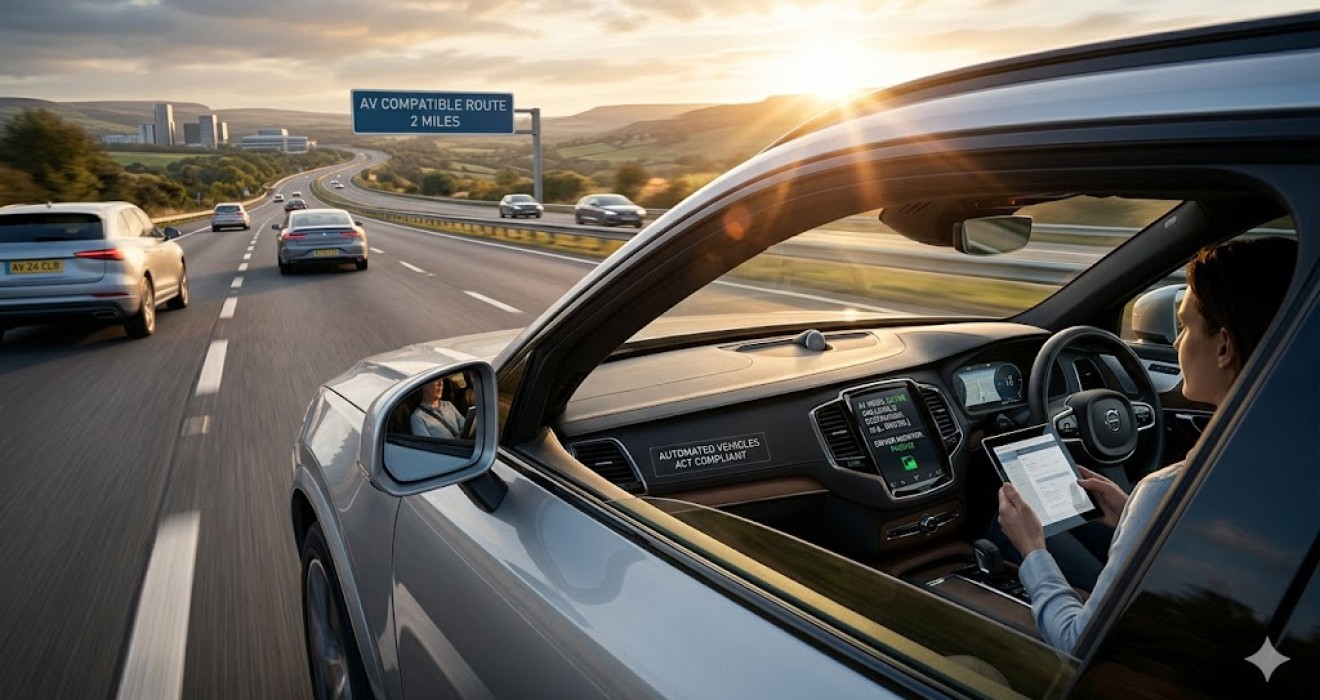
We are currently standing on the precipice of Level 3 automation, where the vehicle can take full control under specific conditions—such as slow-moving motorway traffic—but requires the human driver to step in when requested. True driverless motoring, however, requires Level 4 or Level 5 capability. Achieving this milestone means overcoming massive technical hurdles, from training artificial intelligence to navigate unpredictable British weather to perfecting real-time sensory perception via LiDAR, radar, and cameras.
While we await the mass adoption of these futuristic cabins, drivers continue to find unique ways to make their current vehicles stand out. For those looking to add a touch of personality to their current assisted ride without breaking the bank, exploring an expansive index of cheap private plates is a brilliant way to customise a vehicle’s identity today.
The Legislative Journey in the UK
The timeline for driverless cars isn’t solely dependent on engineering breakthroughs; the legal framework must evolve at a matching pace. The UK government has been relatively proactive, introducing landmark legislation such as the Automated Vehicles Act. This legal framework establishes clear guidelines regarding liability, insurance, and safety standards, shifting the legal responsibility from the human occupant to the vehicle manufacturer when the automated systems are fully engaged.
Regulatory approval is a meticulous process. Insurance groups need to map out complex liability scenarios, and road traffic laws must adapt to a world where “drivers” might be checking emails or watching a movie. This shift in how vehicles are managed will also alter the fleet industry. To understand how corporate operations are adapting to modern road trends, take a look at our industry guide on how private number plates make company vehicles stand out to see how custom identifiers protect corporate branding.
As autonomous fleets gradually roll out across commercial sectors, classic registration formats will continue to serve as premium status symbols. Enthusiasts who prefer classic, uncluttered aesthetics are increasingly searching for prefix and suffix formats. Commencing a comprehensive private plates search allows vehicle owners to track down historical sequences that elevate any vehicle’s aesthetic, regardless of whether it features a steering wheel.
Public Perception, Infrastructure, and the Ethical Dilemma
Beyond technology and law lies the hurdle of public trust. Surveys consistently show a sharp divide among motorists regarding autonomous safety. While proponents highlight that eliminating human error could dramatically reduce road traffic accidents, sceptics remain wary of software glitches, cybersecurity threats, and the loss of driving enjoyment. Furthermore, our current infrastructure requires massive upgrades; self-driving systems rely on clear road markings, smart traffic signals, and robust 5G connectivity to function flawlessly.
There are also deep ethical dilemmas to address. How should an autonomous vehicle be programmed to react in an unavoidable accident scenario? Resolving these moral algorithms will take time, meaning the rollout of fully driverless cars will likely be incremental rather than an overnight revolution. We are much more likely to see autonomous shuttles and geofenced ride-hailing services in major cities long before individual consumers can buy a fully self-driving car for their driveway.
During this extended transition period, the passion for traditional car culture remains incredibly vibrant. The pleasure of owning, driving, and personalising a machine is something AI cannot replicate. For millions of motorists, assigning a personalised number plate to their vehicle serves as an irreplaceable celebration of individual style and automotive history.
The Road Ahead: What to Expect Next
So, how close are we really? While completely unrestricted, driverless travel everywhere is still years away, highly controlled autonomous experiences are closer than you think. Over the coming years, expect to see increasingly advanced driver-assist systems taking the strain out of monotonous motorway commutes and complex parking maneuvers.
The future of transport is undoubtedly high-tech, but it doesn’t mean losing our personal connection to the vehicles we own. Whether you are prepping your current car for the modern era or looking ahead to the next generation of motoring, finding the perfect visual configuration makes all the difference. Explore our expert guide on the perfect gifts to give alongside private number plates to discover brilliant ways to celebrate your love for the open road.